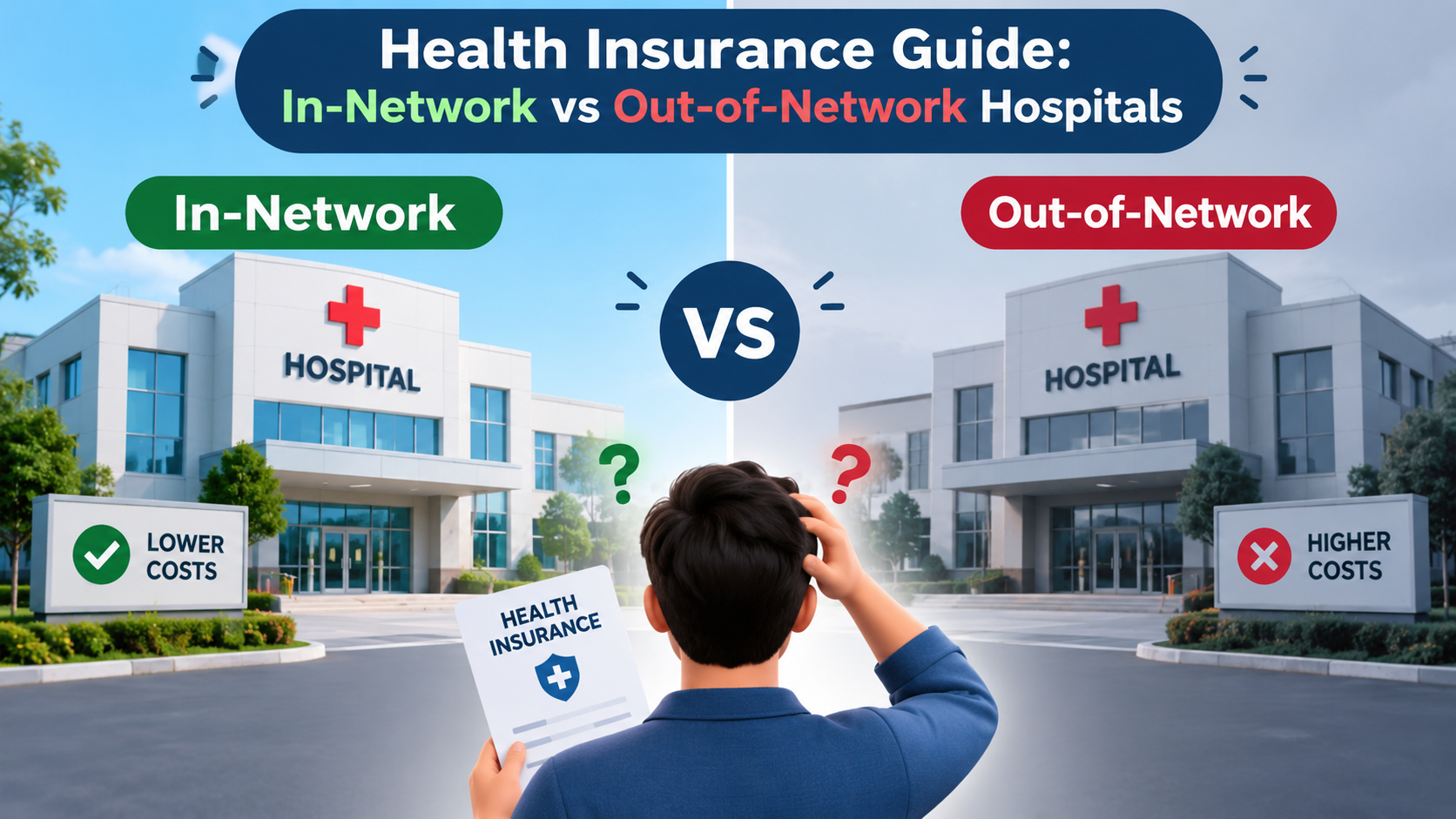
Choosing a hospital is not only a medical decision. In the United States, it can also be an important financial decision because your health plan’s network can affect how much you pay for hospital care. A hospital that is in-network may be covered under negotiated rates and your plan’s standard cost-sharing rules, while voluntarily receiving care from an out-of-network provider can expose you to different coverage rules and potentially much higher costs.
The distinction is not always as simple as checking the hospital’s name. A hospital may participate in your insurance network while an individual physician, laboratory, ambulance provider, or another professional involved in your care has a different network relationship. Federal surprise-billing protections address many situations involving emergency care and certain services at in-network facilities, but they do not make every out-of-network service equivalent to in-network care.
This guide explains how provider networks work, what in-network and out-of-network mean, how deductibles and coinsurance affect your bill, how PPO and HMO plans differ, what federal surprise-billing protections can do, and how to verify coverage before scheduled hospital care. Insurance contracts, provider networks, and state protections can change, so always confirm current benefits with your health plan before non-emergency treatment.
What Is a Health Insurance Provider Network?
A health insurance network is a group of healthcare providers and facilities that have contractual arrangements with an insurance plan. Depending on the plan, the network can include hospitals, physicians, pharmacies, laboratories, imaging centers, outpatient facilities, behavioral health professionals, and other healthcare providers.
Network participation matters because insurers generally negotiate payment arrangements with participating providers. Those arrangements can affect the allowed amount used to calculate what the insurer pays and what the patient owes.
According to HealthCare.gov’s definition of a network, a network is the facilities, providers, and suppliers contracted with a health insurer to provide healthcare services.
Networks are specific to individual insurance products. Knowing that a hospital “takes” or “accepts” an insurance company is therefore not enough. An insurer may offer several plans with different networks, and a hospital can participate in one plan while being outside another plan offered by the same company.
In-Network vs Out-of-Network Hospitals: The Key Difference
| Feature | In-Network Hospital | Out-of-Network Hospital |
|---|---|---|
| Relationship with your plan | Participates in your specific health plan’s network | Does not participate in your specific plan’s network |
| Contracted rates | Generally subject to negotiated contractual payment arrangements | Usually not subject to your plan’s in-network negotiated arrangement |
| Patient cost | Usually lower under the plan’s normal cost-sharing structure | May be substantially higher, depending on the plan and circumstances |
| Coverage | Generally covered according to the plan’s benefits and medical-necessity rules | May receive reduced coverage or no non-emergency coverage under some plans |
| Deductible | Usually applies to the in-network deductible when applicable | A separate out-of-network deductible may apply if the plan offers such benefits |
| Balance billing | Generally limited by the provider’s contract for covered services | Can be a risk in situations not protected by federal or state law |
| Best approach before scheduled care | Verify both hospital and treating providers | Ask insurer about benefits, authorization, allowed amount, and alternatives before proceeding |
What Is an In-Network Hospital?
An in-network hospital participates in the network associated with your particular insurance plan. The contractual relationship generally establishes payment terms between the insurer and hospital for covered services.
This does not mean hospital care is free. You can still be responsible for a deductible, copayment, coinsurance, or other permitted cost sharing. The amount depends on your plan, the service received, your accumulated spending for the plan year, and other coverage requirements.
For example, a person who has not met an applicable deductible may owe more than someone enrolled in the same plan who has already satisfied that deductible. Likewise, inpatient and outpatient hospital benefits may have different cost-sharing structures.
What Is an Out-of-Network Hospital?
An out-of-network hospital does not have the applicable network relationship with your particular health plan. Your financial exposure depends heavily on the type of insurance you have and why you received out-of-network care.
Some plans provide benefits for certain voluntary out-of-network services, generally with greater patient cost sharing. Other plans provide little or no coverage for non-emergency out-of-network care except in circumstances specified by the policy or required by law.
Out-of-network care can also create a potential balance-billing issue when legal protections do not apply. Balance billing occurs when a provider bills a patient for the difference between the provider’s charge and the amount recognized or paid by the insurance plan, subject to applicable federal and state protections.
Why In-Network Hospital Care Usually Costs Less
The difference starts with the contractual relationship between an insurer and participating providers. For covered services, the contract establishes payment arrangements and limits that generally do not exist in the same form when a patient voluntarily uses a nonparticipating provider.
Your actual in-network bill can still vary considerably. Hospital costs can involve the facility itself plus professional services, imaging, laboratory testing, medications, anesthesia, medical devices, and other components.
Negotiated Rates and Allowed Amounts
The amount displayed on a hospital’s standard charge list is not necessarily what an insured patient will owe. Insurers and providers may have negotiated rates, while patient responsibility is then determined using the plan’s applicable benefits and cost-sharing provisions.
For this reason, comparing hospital “prices” without considering insurance can be misleading. Two people receiving similar care at the same facility can have different financial responsibilities because their insurance plans, deductibles, network arrangements, and covered services differ.
Network Discounts Do Not Mean Zero Cost
A common mistake is assuming that in-network means fully covered. An in-network service can still generate a substantial bill if you have a high deductible, significant coinsurance, or a service that is subject to other coverage rules.
Likewise, a service may require prior authorization even though both the physician and hospital are in-network. Network status is only one component of determining coverage.
Health Insurance Terms That Determine What You Pay
Understanding a few insurance terms makes hospital estimates much easier to interpret. HealthCare.gov provides standardized explanations of many of these concepts through its health insurance glossary.
| Term | What It Means | Why It Matters |
|---|---|---|
| Premium | The amount paid for health insurance coverage | Usually paid regardless of whether you receive hospital care |
| Deductible | The amount you pay for covered services before the plan begins paying according to its terms, subject to exceptions | Can substantially affect your early-year medical costs |
| Copayment | A fixed amount for a covered service under applicable plan rules | Some plans use copays for certain visits or services |
| Coinsurance | A percentage of the applicable cost you pay for a covered service | Can make expensive hospital services financially significant even after the deductible |
| Out-of-pocket maximum | A plan-defined limit on what you pay for covered services subject to applicable rules | Not every expense necessarily counts toward the limit |
| Prior authorization | Advance approval that a plan may require for certain services | Failure to follow authorization requirements can affect coverage |
| Allowed amount | The maximum amount on which payment for a covered healthcare service is based under the plan | Helps determine insurer and patient responsibility |
Deductibles
Your deductible can be one of the largest factors affecting your hospital bill. If your plan has an applicable deductible that you have not yet met, you may be responsible for a substantial portion of covered services before coinsurance or other post-deductible benefits begin.
Plans offering out-of-network benefits may have separate deductibles or other rules for those services. Spending in one category does not necessarily satisfy requirements in another. Your Summary of Benefits and Coverage and plan documents should explain the applicable structure.
Coinsurance
Coinsurance means you pay a percentage of an applicable covered amount rather than a fixed dollar copayment. The percentage and the amount to which it is applied depend on your plan.
For hospital care, this distinction matters because a percentage of a high-cost service can create meaningful patient responsibility. Ask for an estimate in dollars rather than relying only on a statement such as “you have 20% coinsurance.”
Out-of-Pocket Maximum
An out-of-pocket maximum limits certain spending for covered services under the terms of the plan. However, consumers should not assume that every healthcare expense counts toward that limit.
Premiums and costs for services the plan does not cover generally do not function the same way as covered in-network cost sharing. Out-of-network expenses may also be treated differently depending on the plan. Review your plan documents before assuming a particular bill will count toward an annual limit.
How PPO, HMO, EPO and POS Plans Handle Networks
Your health plan type can determine how much flexibility you have to use providers outside its network. The following descriptions are general; actual plan documents control your coverage.
| Plan Type | General Network Approach | Out-of-Network Considerations |
|---|---|---|
| HMO | Typically emphasizes care within the plan’s network | Non-emergency out-of-network services may not be covered except under plan-specific circumstances |
| PPO | Usually provides more provider flexibility | May cover out-of-network services but often at greater patient cost |
| EPO | Generally requires use of the plan’s network for routine covered care | Out-of-network benefits are typically limited, with exceptions such as emergency situations |
| POS | Combines network-based care with certain out-of-network options | Plan requirements, referrals, and higher cost sharing may apply |
PPO Plans
A Preferred Provider Organization, or PPO, commonly provides greater flexibility to receive covered services outside the preferred network than more restrictive plan designs. That flexibility does not mean the financial consequences are minor.
A PPO can impose higher cost sharing for out-of-network care, and patients may face a separate deductible or potential balance billing where permitted. Before deliberately choosing an out-of-network hospital, ask your insurer for a detailed explanation of how your benefits would apply.
HMO and EPO Plans
Health Maintenance Organization and Exclusive Provider Organization designs generally place greater emphasis on network providers. Depending on the policy, routine non-emergency care outside the network may not receive plan benefits.
This makes network verification particularly important before elective surgery, diagnostic procedures, specialist treatment, or other planned hospital services.
A Hospital Can Be In-Network While a Doctor Is Not
This is one of the most important details to understand before hospital treatment. Hospital network status does not automatically establish the network status of every professional or entity involved in your care.
A hospital encounter may involve:
- The hospital or facility
- Your surgeon or treating physician
- Anesthesiology professionals
- Radiologists
- Pathologists
- Laboratories
- Imaging services
- Assistant surgeons or other clinicians
- Ambulance or medical transportation providers
- Medical equipment or other ancillary services
Some of these services may be billed separately. This is why checking only the hospital website or asking, “Do you take my insurance?” may not provide enough information for planned care.
Federal law now protects consumers against many surprise out-of-network bills in specified situations. Even so, checking the network status of the facility and known professionals before scheduled care remains a useful financial safeguard.
The No Surprises Act and Out-of-Network Hospital Bills
The federal No Surprises Act established significant consumer protections against certain unexpected out-of-network medical bills. The federal protections generally took effect in 2022 and apply in specified situations.
According to CMS, the law provides protections that include many emergency services received from out-of-network providers or facilities and certain non-emergency services furnished by out-of-network providers at participating healthcare facilities.
Emergency Services
In an emergency, patients often cannot reasonably determine whether the nearest emergency department or clinicians are in-network. Federal protections generally prohibit higher out-of-network cost sharing and balance billing for covered emergency services in circumstances governed by the No Surprises Act.
The rules are designed so consumers do not have to delay emergency treatment simply to investigate provider-network contracts. Additional state protections may also apply.
Certain Non-Emergency Services at In-Network Facilities
The law also addresses certain situations in which a patient chooses an in-network hospital or other covered facility but receives services from an out-of-network provider there. For protected services, consumers generally receive in-network cost-sharing treatment rather than being exposed to an unexpected balance bill.
However, federal law contains specific rules, definitions, exceptions, and notice-and-consent provisions. Consumers should not interpret the law as a universal ban on every possible out-of-network charge.
Air and Ground Ambulance Services
The No Surprises Act includes protections involving covered air ambulance services in applicable circumstances. Ground ambulance services are a different issue and are not covered by the federal No Surprises Act protections in the same way.
State law or other protections may affect ground ambulance billing. Patients concerned about an ambulance bill should check both federal information and protections available in their state.
What to Do About a Suspected Surprise Bill
If you believe a medical bill violates federal surprise-billing protections, compare the provider’s bill with your insurer’s Explanation of Benefits. Keep copies of estimates, authorization records, network confirmations, and communications with the hospital and insurer.
CMS provides consumer information and a federal help desk through its Medical Bill Rights resources.
How to Verify Whether a Hospital Is In-Network
Network verification should be treated as a process rather than a single website search. Provider directories are useful starting points, but for planned expensive care, confirmation from your insurance plan can reduce uncertainty.
- Identify your exact insurance plan. Find the complete plan name and network information on your insurance card or member portal.
- Search the insurer’s provider directory. Look for the hospital under your specific plan rather than searching only by insurance-company name.
- Contact your insurer. Confirm that the hospital is participating for your plan and the intended service date.
- Confirm the facility location. A health system can operate multiple hospitals and outpatient sites with different contracting arrangements.
- Check the treating physician. Verify the surgeon, specialist, or other known professional separately.
- Ask about authorization. Determine whether your admission, procedure, imaging, or treatment requires prior authorization.
- Request an estimate. Ask both the hospital and insurer for available estimates of your expected responsibility.
- Keep records. Save confirmation numbers, screenshots, messages, representative names, and dates.
Ask the Insurer, Not Just the Hospital
A hospital billing office can provide useful information about insurance participation, but your insurer administers your plan benefits. The safer approach is to verify network status directly through the insurer as well.
Instead of asking only “Do you accept my insurance?”, ask:
- Is this exact hospital location in-network for my exact plan?
- Is my treating physician in-network?
- Is the planned procedure covered?
- Does it require prior authorization or a referral?
- What deductible remains?
- What copayment or coinsurance applies?
- What is my estimated out-of-pocket responsibility?
- Are there known separately billed providers I should verify?
Prior Authorization: Network Status Is Not the Whole Story
A hospital and physician can both be in-network while the planned service still requires prior authorization. Prior authorization is an insurer’s process for reviewing whether specified services meet the plan’s coverage requirements before care is provided.
Services that require authorization vary by plan and may include certain surgeries, inpatient admissions, imaging, specialty medications, or other treatments.
Authorization should not be confused with a guarantee of payment. Coverage and final patient responsibility can still depend on eligibility, benefits, medical necessity criteria, coding, the services actually performed, and other plan provisions.
For scheduled care, ask who is responsible for obtaining authorization and verify its status with the insurer. Keep the authorization or reference number if one is provided.
How Hospital Costs Differ by Network Status
There is no reliable single nationwide price that tells a patient what an in-network or out-of-network hospital visit will cost. Hospital services vary enormously, and patient responsibility depends on the clinical service and insurance contract.
| Service | Cost Considerations | Main Factors Affecting Patient Cost |
|---|---|---|
| Emergency department care | Costs vary by services, testing, treatment, and insurance; federal surprise-billing rules may apply | Plan benefits, deductible, tests, imaging, clinicians, admission, medications |
| Elective surgery | Obtain an insurance-specific estimate before treatment when possible | Hospital, surgeon, anesthesia, implants, network status, authorization, complexity |
| Inpatient hospitalization | Final charges can differ substantially from pre-service estimates | Length of stay, diagnosis, procedures, intensive care, medications, physicians |
| Outpatient procedure | Facility and professional bills may be separate | Site of care, procedure, facility fee, clinicians, pathology, laboratory services |
| Diagnostic imaging | Facility and professional interpretation may be billed separately | Type of imaging, site, contrast, radiologist, insurance benefits |
Published charges, negotiated insurer rates, self-pay prices, insurer allowed amounts, and the amount an individual insured patient owes are different concepts. A hospital’s posted price therefore should not automatically be interpreted as your expected bill.
Hospital Price Transparency and Cost Estimates
CMS requires hospitals operating in the United States to make specified standard charge information publicly available under federal hospital price transparency requirements.
These requirements are intended to make hospital pricing information more accessible, including through machine-readable information and consumer-friendly price information under applicable federal rules.
Price-transparency data can help with research, but it does not replace an insurance-specific estimate. Your actual responsibility depends on your plan, remaining deductible, cost sharing, the exact services performed, and other factors.
Why Your Final Hospital Bill Can Differ From an Estimate
Medical care does not always follow a predictable script. A physician may determine that additional laboratory work or imaging is necessary. A procedure may become more complex than anticipated, or an inpatient stay may last longer than initially expected.
Differences can also result from:
- Additional medically necessary services
- Changes in diagnosis or procedure
- Laboratory and pathology services
- Imaging
- Medications
- Medical devices or implants
- Anesthesia services
- Professional fees
- Length of hospitalization
- Insurance claim processing and benefit rules
Treat a pre-service estimate as planning information rather than a guaranteed final bill unless the provider or plan explicitly states otherwise under applicable terms.
Good Faith Estimates for Uninsured and Self-Pay Patients
The No Surprises Act also created protections for people who are uninsured or who do not intend to submit a claim to their insurance for scheduled care. Under applicable federal rules, healthcare providers and facilities generally must provide a good faith estimate of expected charges when care is scheduled sufficiently in advance or when the patient requests one.
CMS explains these rights through its information for people without insurance or not using insurance.
These estimates can help patients understand expected charges before scheduled services. Federal rules also provide a patient-provider dispute resolution process in qualifying situations when a final bill is substantially higher than the good faith estimate.
If you plan to pay cash even though you have insurance, first consider asking your insurer how not submitting the claim may affect deductible credit, out-of-pocket calculations, and other benefits.
When Using an Out-of-Network Hospital May Be Considered
There are circumstances in which a patient may investigate an out-of-network provider. For example, a particular specialist or service may not be readily available in the network, or a patient may have continuity-of-care considerations.
Before voluntarily scheduling expensive out-of-network treatment, ask the insurer whether a network exception, gap exception, single-case agreement, or other plan-specific process may be available. Terminology and eligibility vary by insurer and plan, so such an exception should never be assumed.
Ask for any approval in writing and confirm exactly how cost sharing will be calculated.
Do Not Delay Emergency Care to Check a Network Directory
A medical emergency is different from scheduled care. If you reasonably believe you need emergency medical attention, financial research should not delay necessary emergency evaluation.
Federal law provides important billing protections for many emergency services, while the CMS guidance for consumers using health insurance explains relevant surprise-billing rights.
Medicare and Provider Networks
The meaning of “network” depends partly on how a person receives Medicare coverage.
Original Medicare operates differently from private managed-care networks. People with Original Medicare generally can receive covered services from doctors and hospitals that accept Medicare, subject to Medicare’s participation and coverage rules.
Medicare Advantage plans are offered by Medicare-approved private insurers and can use provider networks. Network requirements vary according to plan type and terms. Medicare advises beneficiaries to understand the rules of their specific plan and whether providers participate.
Current information about these differences is available through the official Medicare coverage options resources.
Medicaid and Hospital Networks
Medicaid is jointly funded by the federal government and states, but programs are administered at the state level within federal requirements. Many beneficiaries receive services through Medicaid managed care arrangements.
Because Medicaid programs and managed-care networks vary by state and plan, patients should verify hospital participation using their state Medicaid agency or managed-care plan rather than assuming that every Medicaid-participating facility has the same relationship with every plan.
The federal Medicaid.gov website provides program information and links relevant to state Medicaid resources.
Marketplace Health Insurance and Hospital Networks
Plans purchased through the Health Insurance Marketplace also use provider networks. A consumer comparing Marketplace plans should consider more than premiums and deductibles if access to a particular hospital, specialist, or health system matters.
Provider participation can change, and different plans from the same insurance company can have different networks. Before enrolling, check the plan’s current provider directory and, where practical, confirm participation with providers that are particularly important to you.
After enrollment, use the plan’s member resources when verifying network status for scheduled treatment.
What If the Insurer Directory Says a Hospital Is In-Network?
If you relied on apparently incorrect network information and later receive an unexpected out-of-network claim, do not immediately assume the bill is correct.
Review your Explanation of Benefits and the provider’s bill. Contact the insurer and explain what network information you relied on. Preserve screenshots of provider-directory results, call-reference numbers, written confirmations, and other records.
Federal and state rules may provide protections depending on the circumstances. If an internal appeal does not resolve the issue, your state’s insurance regulator or applicable federal consumer-assistance resources may be able to explain available options.
How to Read an Explanation of Benefits After Hospital Care
An Explanation of Benefits, commonly called an EOB, is not necessarily a bill. It is a statement from your health plan explaining how a claim was processed.
Review information such as:
- The provider and service date
- The amount submitted to the plan
- The plan’s allowed or recognized amount where applicable
- The amount paid by insurance
- The amount applied to your deductible
- Copayment or coinsurance responsibility
- Any denied or non-covered amounts
- Network classification
- Reason codes or explanatory notes
Compare the EOB with the bill you receive from the hospital or physician. If the provider is requesting substantially more than the EOB identifies as your responsibility, contact both the provider’s billing office and insurer before paying the disputed portion.
Questions to Ask Before Scheduled Hospital Treatment
| Who to Ask | Question |
|---|---|
| Insurer | Is this exact hospital location in-network for my plan? |
| Insurer | Is my surgeon or treating physician in-network? |
| Insurer | Does this service require prior authorization or referral? |
| Insurer | How much of my applicable deductible remains? |
| Insurer | What copayment or coinsurance applies? |
| Hospital | Can you provide an insurance-specific estimate? |
| Hospital | Which professional services may be billed separately? |
| Both | Are there other known providers whose network status should be verified? |
Common Network Mistakes That Can Increase Medical Bills
Checking the Insurance Company Instead of the Exact Plan
“The hospital accepts my insurer” is not the same as “the hospital is in-network for my plan.” Large insurers offer numerous products and networks. Always use the exact plan information shown on your member identification card.
Verifying the Hospital but Not the Doctor
The facility and physician can have different contractual relationships. For scheduled care, verify both whenever possible.
Ignoring Prior Authorization
Network participation does not eliminate authorization requirements. Confirm whether authorization is required before a scheduled procedure and whether it has been obtained.
Assuming Every Out-of-Network Bill Is Illegal
The No Surprises Act provides significant protections, but it does not convert every voluntary out-of-network service into an in-network service. The details of how and why care was received matter.
Assuming an Estimate Is a Guaranteed Price
Hospital estimates are valuable planning tools, but actual care may differ from what was anticipated. Ask what is included in the estimate and which charges may be billed separately.
Frequently Asked Questions
Is it always cheaper to go to an in-network hospital?
In-network care is generally designed to result in more favorable cost-sharing terms because the provider participates in your plan’s network. However, it is not automatically inexpensive. Your deductible, coinsurance, copayments, out-of-pocket spending to date, type of service, and coverage rules can still create significant costs. For scheduled treatment, request an estimate based on your specific insurance rather than assuming that in-network status means a small bill.
Will insurance pay anything at an out-of-network hospital?
It depends on the plan and circumstances. Some PPO and other plans may provide benefits for voluntary out-of-network services, often with greater patient responsibility. Some HMO or EPO arrangements may provide little or no routine non-emergency out-of-network coverage. Emergency care and certain unexpected out-of-network services can also be subject to federal or state protections. Review your plan documents and contact the insurer for a case-specific answer.
What happens if I go to an out-of-network hospital during an emergency?
The federal No Surprises Act provides protections for many covered emergency services received from out-of-network providers or facilities. In applicable circumstances, consumers generally cannot be charged higher out-of-network cost sharing or subjected to prohibited balance billing. Specific rules and exceptions apply, and state law can provide additional protections. You should not delay necessary emergency evaluation simply to determine a hospital’s network status.
Can a hospital be in-network but my surgeon be out-of-network?
Yes. Hospitals and individual healthcare professionals can have separate contracts with insurers. This is why patients arranging planned surgery should verify the hospital and surgeon separately. Other professionals may also be involved. Federal surprise-billing rules protect patients from many unexpected out-of-network charges for specified services at in-network facilities, but verifying known providers beforehand remains a sensible financial precaution.
How do I know for certain whether a hospital is in-network?
Start with your insurer’s current directory using your exact plan, then contact the insurer for confirmation before expensive scheduled treatment. Verify the exact facility location because different facilities within one health system may have different network relationships. Ask for a reference number or written confirmation when available. You can also confirm with the hospital, but the insurer should be part of the verification process because it administers your plan’s network benefits.
Does an in-network hospital guarantee that my procedure is covered?
No. Network status and coverage are related but separate questions. A hospital may be in-network while a particular treatment is excluded, subject to medical-necessity criteria, requires prior authorization, or is covered under specific conditions. Verify the facility, physician, procedure, authorization requirements, and estimated cost with your health plan before non-emergency treatment.
What is balance billing?
Balance billing generally refers to a provider billing a patient for the difference between the provider’s charge and an amount recognized or paid by the health plan, beyond permitted patient cost sharing. It is particularly relevant to out-of-network care. The No Surprises Act prohibits balance billing in many specified emergency and non-emergency situations, while state laws may provide additional protections. It is not prohibited in every out-of-network situation.
Do out-of-network expenses count toward my out-of-pocket maximum?
Not necessarily. How out-of-network spending is treated depends on your health plan and applicable law. A plan may have different cost-sharing structures or limits for out-of-network services, and some amounts may not count toward an applicable maximum. Check the plan’s Summary of Benefits and Coverage and other governing plan documents, or ask the insurer how a specific service would be treated.
What should I do if I receive an unexpected out-of-network hospital bill?
Compare the bill with your insurer’s Explanation of Benefits before paying a disputed amount. Contact the insurer and provider to determine why the claim was processed as out-of-network. Save network confirmations, estimates, authorizations, and call records. If you believe the charge violates federal surprise-billing protections, review CMS Medical Bill Rights resources. Depending on your coverage and location, state consumer-assistance or insurance-regulator resources may also apply.
Can I get a hospital cost estimate before treatment?
Yes, and requesting one is particularly useful for planned care. Ask the hospital for an estimate based on the scheduled services and your insurance information, and ask your insurer for its estimate of your responsibility. Hospital price-transparency resources can provide additional information. Remember that estimates may change if the services actually provided differ. Uninsured and qualifying self-pay patients also have specific federal rights regarding good faith estimates for scheduled care.
Is a PPO always better than an HMO if I want more hospital choices?
A PPO commonly provides greater flexibility to receive covered out-of-network care, but “better” depends on your needs, available networks, premiums, cost sharing, prescriptions, physicians, and other benefits. Greater provider flexibility can come with different costs. An HMO may work well for someone whose preferred physicians and hospitals participate in its network. Compare the complete plan rather than selecting insurance based only on the PPO or HMO label.
Does Medicare use in-network and out-of-network hospitals?
It depends on the type of Medicare coverage. Original Medicare does not operate like a typical private insurer’s restricted provider network, although provider participation and Medicare coverage rules still matter. Medicare Advantage plans are offered through private insurers and may use provider networks, with rules varying by plan type. Beneficiaries should verify a hospital’s status under their specific Medicare coverage before planned care.
Making a Safer Hospital and Insurance Decision
The most useful way to think about hospital networks is that “in-network” is the beginning of your cost investigation, not the end. Before planned care, confirm your exact hospital location, treating physician, procedure coverage, prior authorization requirements, remaining deductible, cost sharing, and estimated patient responsibility.
For major treatment, also compare clinical factors rather than allowing insurance alone to determine where you receive care. Relevant considerations can include the hospital’s expertise for your condition, your physician’s qualifications, available services, location, continuity of care, and your individual medical needs. Discuss medical decisions with qualified healthcare professionals.
If an out-of-network provider is medically or practically important to you, contact your insurer before scheduling treatment and ask what benefits apply and whether an exception process is available. Get important coverage information in writing whenever possible.
Finally, keep records. An insurance directory screenshot, authorization number, written estimate, Explanation of Benefits, and documented network confirmation can become valuable if a claim is later processed differently than expected. A few verification steps before scheduled treatment can make the financial side of hospital care considerably more predictable.
Medical and Informational Disclaimer
This article is for general educational and informational purposes and is not a substitute for professional medical, legal, or insurance advice. Health-plan benefits, provider networks, hospital prices, laws, and coverage requirements can change. Confirm current information directly with your insurer, healthcare provider, hospital, and appropriate government agency before making medical or financial decisions.
Sources Used
- HealthCare.gov – Health Insurance Network Definition
- HealthCare.gov – Health Insurance Glossary
- Centers for Medicare & Medicaid Services – No Surprises Act
- CMS – Medical Bill Rights
- CMS – Know Your Rights When Using Health Insurance
- CMS – Rights for Consumers Without Insurance or Not Using Insurance
- CMS – Hospital Price Transparency
- Medicare.gov – Medicare Coverage Options
- Medicaid.gov – Official Medicaid Program Information